
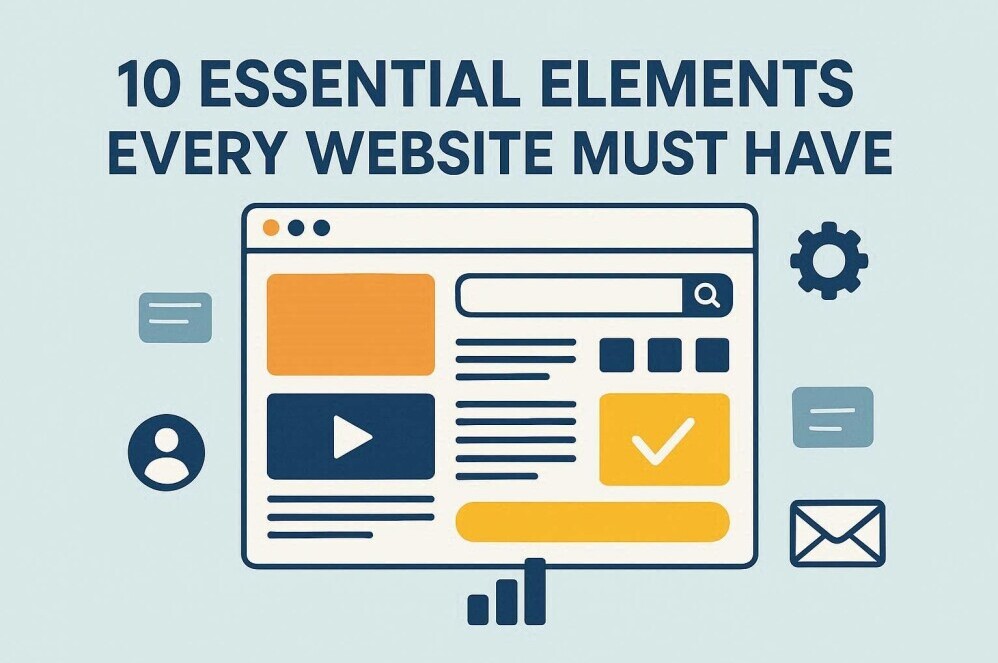
Have you ever wondered and asked yourself this question before designing a new website.
What are the most essential elements for a good and engaging website?
Listed are the 10 most essential elements that you need to know if you want your website to stand out from the others. More detail explanations of these essential elements below the list.
10 Essential Elements Every Website Must Have
- A strong homepage that makes a memorable first impression and clearly communicates who you are.
- Clear messaging with powerful headlines & subheadings so visitors instantly understand your purpose and value.
- Visible, compelling Calls-to-Action (CTAs) guiding users on what to do next.
- Consistent visual branding including color palette, typography, and imagery to build recognition and trust.
- Intuitive navigation that makes it easy to explore your site without confusion.
- Smooth user experience (UX) with fast load times and mobile responsiveness.
- High-quality content that’s valuable, relevant, informative, and regularly updated.
- Multimedia elements like videos, infographics, and images to boost engagement and support different learning styles.
- Trust-building components such as HTTPS security, testimonials, certifications, policies, and real customer reviews.
- Easy contact and communication options including forms, live chat, multiple contact channels, and a clear About/Contact page.
A homepage is like that first handshake you offer someone new. It’s gotta be memorable, impactful, and say “Hey, this is who I am.” On a website, the homepage sets the stage for everything else. Those first few seconds? They matter a lot.
You gotta get right to the point with your messaging. Visitors need to know what you’re all about without hunting for the details. Use headlines and sub-headlines that pack a punch and explain your core offerings right away. No one wants to guess what you’re selling or why they should care.
And hey, don’t forget those calls-to-action (CTAs). They’re like that nudge to move the conversation forward. Make ’em clear, visible, and direct. Wanna sign up for a newsletter, try a demo, or maybe just contact you for more info? It should be super obvious how to take that next step.
Visuals and branding? Oh yeah, absolutely essential. Your homepage’s look should reflect your brand identity—colors, font, images—all that jazz. A cohesive, striking visual experience pulls people in and helps them recognize and remember your brand.
So when setting up a homepage, think of it as your chance to make a killer first impression. It’s gotta sparkle and communicate exactly what you’re about, right off the bat.
Navigation and User Experience: Seamless Journey
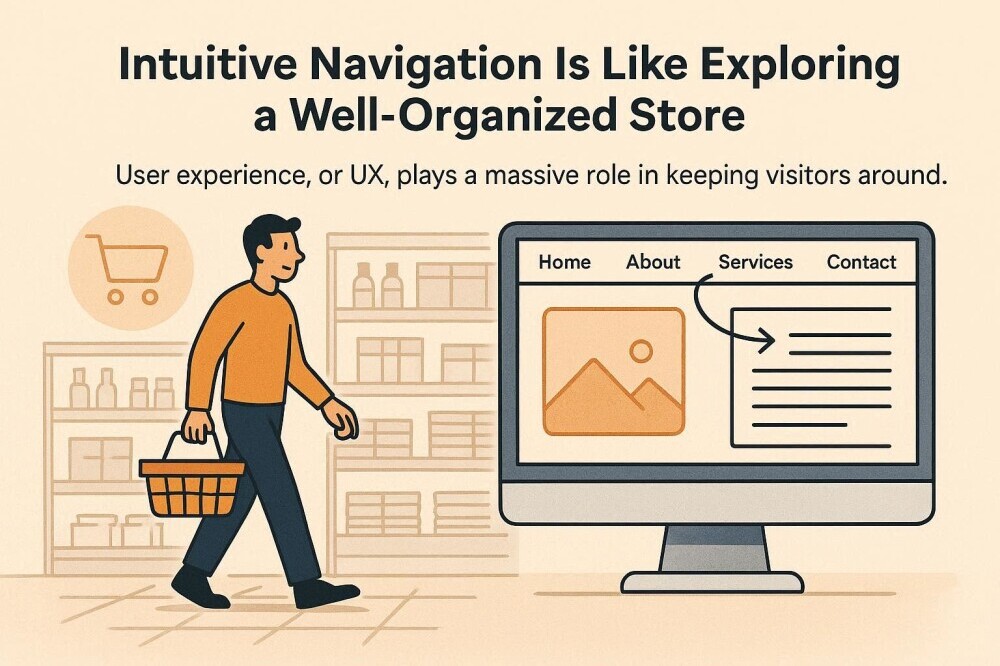
A website with top-notch navigation is kind of like walking through a well-organized store. You know where everything is, and it feels good to explore. This is what intuitive navigation should do for your site.
User experience, or UX, plays a massive role in keeping visitors around. If getting from point A to point B on your site is a hassle, people will bail quicker than you can say ‘404 error’. A smooth, logical flow is key. It’s about making sure users can find what they need easily so they stick around and maybe even convert into customers.
Fast-loading pages and mobile responsiveness aren’t just luxuries anymore—they’re absolute essentials. People don’t have time to wait for slow sites, and with everyone glued to their phones, your website better look and work great on all devices.
Watch out for those common navigational traps like overly complex menus or hidden buttons. Stuff like that can trip up users and cause frustration. Clear labels, simple paths, and a considered layout can spare your users a headache.
And hey, if someone gets lost, they shouldn’t have to wander aimlessly. A solid search function acts like their personal GPS, guiding them straight to that piece of info they’re looking for.
Content: Informative, Engaging, and Valuable
Content is king, for real. It’s the good stuff that keeps users engaged and coming back for more. When you’re crafting content, it’s gotta speak directly to the user’s needs and interests. If it feels like you’re talking right to them, they’re more likely to listen.
There’s a whole world of content types out there. Blogs, guides, resource pages—they all have their place and purpose. Blogs can draw in regular visitors looking for fresh takes, guides are perfect for laying down expertise, and resource pages give users solid, enduring info they can count on.
Now, let’s not forget SEO. It’s important, sure, but never let it take over at the cost of quality. Keywords should blend naturally in your content. When you get it right, your content still reads smoothly and offers genuine value.
And stay fresh! Regular updates aren’t just for software; your content should get periodic refreshes too. Users—and search engines—notice when content gets stale. Keeps things up-to-date and relevant, okay?
Multimedia—videos, infographics, podcasts—these boost engagement like nothing else. They’re not just eye-catching; they cater to different learning styles too. Offer some variety and you’ll hold your audience’s attention better.
Trust Elements: Building Confidence Online

Trust is everything online. Without it, visitors will hesitate to engage, explore, or make a purchase. One of the most fundamental elements is securing your site with HTTPS. A little padlock in the address bar goes a long way in boosting user confidence.
Think of testimonials and reviews as digital word-of-mouth. Authenticity is key, so don’t just cherry-pick the best ones. Feature a mix that genuinely reflects customer experiences. People can spot fake reviews a mile away, so keep it real.
Now, you’ve got those snazzy banners for certifications, affiliations, and awards—display them proudly. They provide third-party validation that you know what you’re doing.
Policies covering privacy, returns, and terms of use should be easy to find and read. It’s not just about legality; it’s about transparency and showing you value your visitors’ trust.
Last but not least, highlight the expertise and credentials of your team. Visitors want to know they’re dealing with seasoned professionals. Whether it’s bios, credentials, or awards, these elements show you’re not just some fly-by-night operation.
Contact and Interaction: Bridging the Communication Gap

Bridging the communication gap on your website is crucial. You want to make it as easy as possible for visitors to reach out or get more info. Creating user-friendly contact forms is a solid start. Keep them short, sweet, and to the point. Nobody has time to fill out endless fields just to ask a question.
Live chat and chatbots offer that instant gratification users crave. They can ask questions and get immediate responses without the wait. Think of these features as the virtual employees working tirelessly around the clock.
Don’t limit yourself to just one channel. Email, social media, phone—offer multiple ways for folks to get in touch. Different folks prefer different methods, so cover all your bases.
A clear ‘About Us’ page is more important than you might think. This is where visitors get to know who’s behind the business. It sets the tone for trust and engagement. And while you’re at it, make your ‘Contact’ page easy to find. No one should have to hunt down how to reach you.
For businesses that rely on appointments or bookings, an easy scheduling system can save a ton of effort for both you and your customers. Your site should remove friction, not add to it, so all touchpoints need to be seamless.
Conclusion
A successful website is more than just a digital storefront—it’s a carefully crafted experience that blends design, content, usability, and trust. When these essential elements come together, they create a powerful online presence that captures attention, builds credibility, and encourages visitors to take action. Whether you’re launching your first site or refining an existing one, focusing on these fundamentals can dramatically elevate your website’s performance and impact.
Which of these 10 essentials do you think is most important for a website’s success, and why?
Share your thoughts in the comments—I’d love to hear your perspective!